Call Center Shrinkage Explained: How to Calculate It and Why It Breaks Staffing Plans
Call Center Shrinkage Explained: How to Calculate It and Why It Breaks Staffing Plans
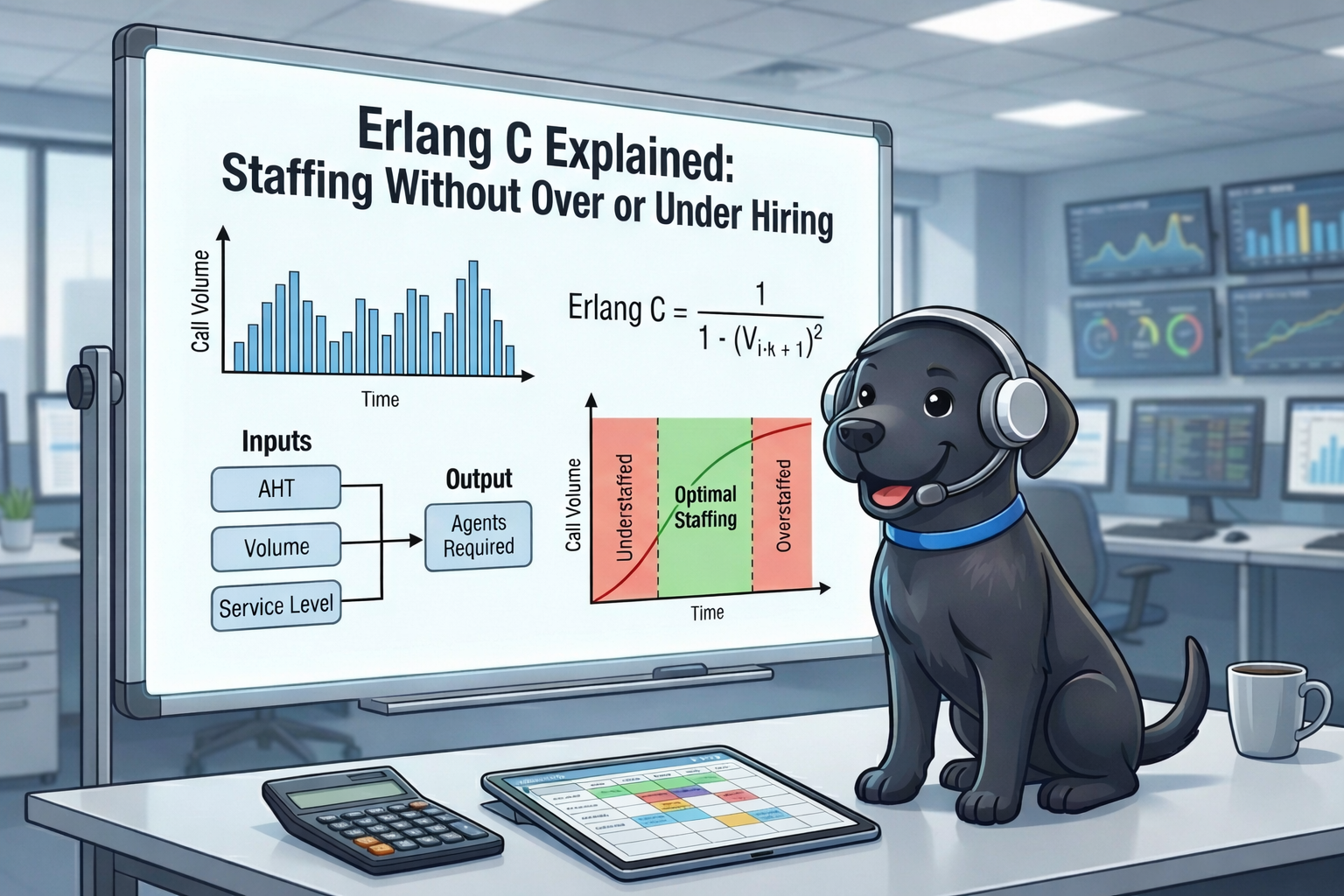
If Erlang C tells you how many agents you need available and forecasting tells you when demand will arrive, shrinkage explains why your contact center still feels under staffed.
I have seen teams hit their forecast, run Erlang C correctly, and still miss service levels day after day. The culprit is almost always the same.
Shrinkage.
This article explains what shrinkage really is, how to calculate it, and how it fits into forecasting, Erlang C, and workforce planning. Together, these three form the core of effective call center staffing.
What Is Call Center Shrinkage
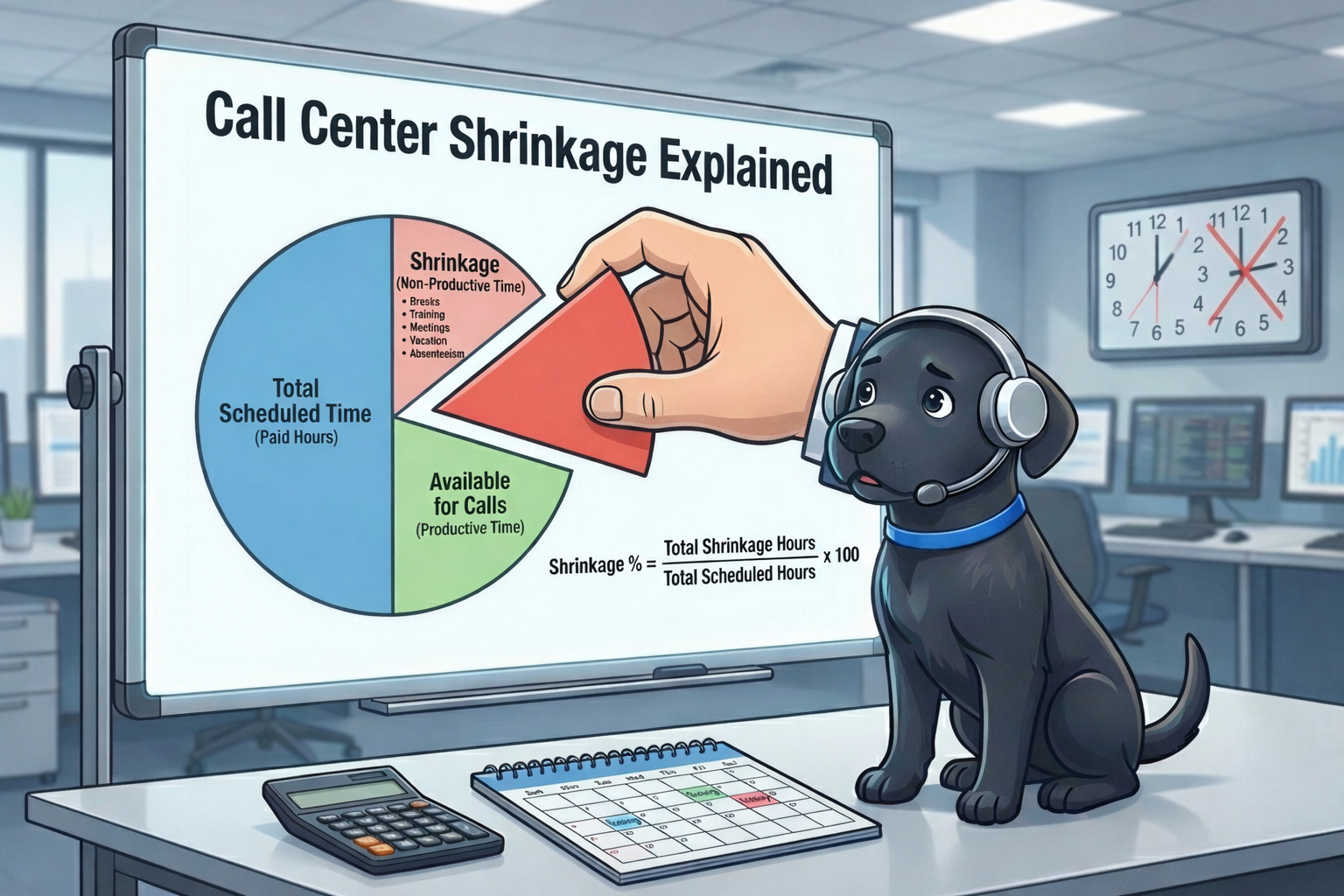
Shrinkage is the percentage of paid agent time that is not available to handle customer contacts.
In other words, shrinkage answers the question:
Of the agents we pay, how many are actually available to take contacts?
Shrinkage exists in every contact center. The problem is not having shrinkage. The problem is pretending it is lower than it really is.
Common Sources of Shrinkage
- Breaks and lunches
- Paid time off and holidays
- Training and onboarding
- Meetings and coaching
- System issues or downtime
- Absenteeism
- Attrition and vacant seats
During periods of growth or change, shrinkage almost always increases.
Why Shrinkage Breaks Staffing Plans
Models like Erlang C calculate how many agents you need available in a given interval. They do not account for how many agents are unavailable.
If you staff directly to Erlang C without layering in shrinkage, your plan assumes perfect attendance, no meetings, no training, and no attrition.
That world does not exist.
This is why teams often feel permanently behind even when their math looks right.
How to Calculate Call Center Shrinkage
Shrinkage is typically expressed as a percentage.
Shrinkage percentage = Unavailable paid time ÷ Total paid time
For example, if agents are unavailable 30 percent of the time due to breaks, training, PTO, and other factors, your shrinkage is 30 percent.
That means only 70 percent of your paid headcount is actually available to handle contacts.
Shrinkage vs Occupancy
Shrinkage is often confused with occupancy, but they measure different things.
- Shrinkage measures availability
- Occupancy measures how busy available agents are
You can have low occupancy and still miss service levels if shrinkage is underestimated.
Shrinkage During Scale and Peak Events
Shrinkage is not static.
During launches, promotions, holidays, or rapid hiring, shrinkage often increases due to:
- New hire training waves
- Higher absenteeism
- Increased coaching needs
- Operational distractions
This is why forecasts that ignore changing shrinkage assumptions often fail during the exact moments they matter most.
How Shrinkage Fits Into the Staffing Trilogy
Effective staffing requires three distinct steps:
- Forecast demand at the interval level
- Use Erlang C to calculate required available agents
- Apply realistic shrinkage to determine total headcount
Skipping any one of these steps leads to under staffing.
This is why shrinkage belongs in workforce planning, not inside the Erlang C formula itself.
Common Shrinkage Mistakes
- Using a single shrinkage number year round
- Ignoring training and ramp time
- Underestimating attrition during growth
- Failing to revisit shrinkage assumptions after launches
Shrinkage assumptions should be reviewed as often as forecasts are.
Final Thoughts
Shrinkage is not a rounding error. It is a structural reality of running a contact center.
Forecasting predicts demand. Erlang C translates demand into required staffing. Shrinkage explains how many people you actually need to employ to make that staffing possible.
When all three work together, staffing plans finally hold up in the real world.