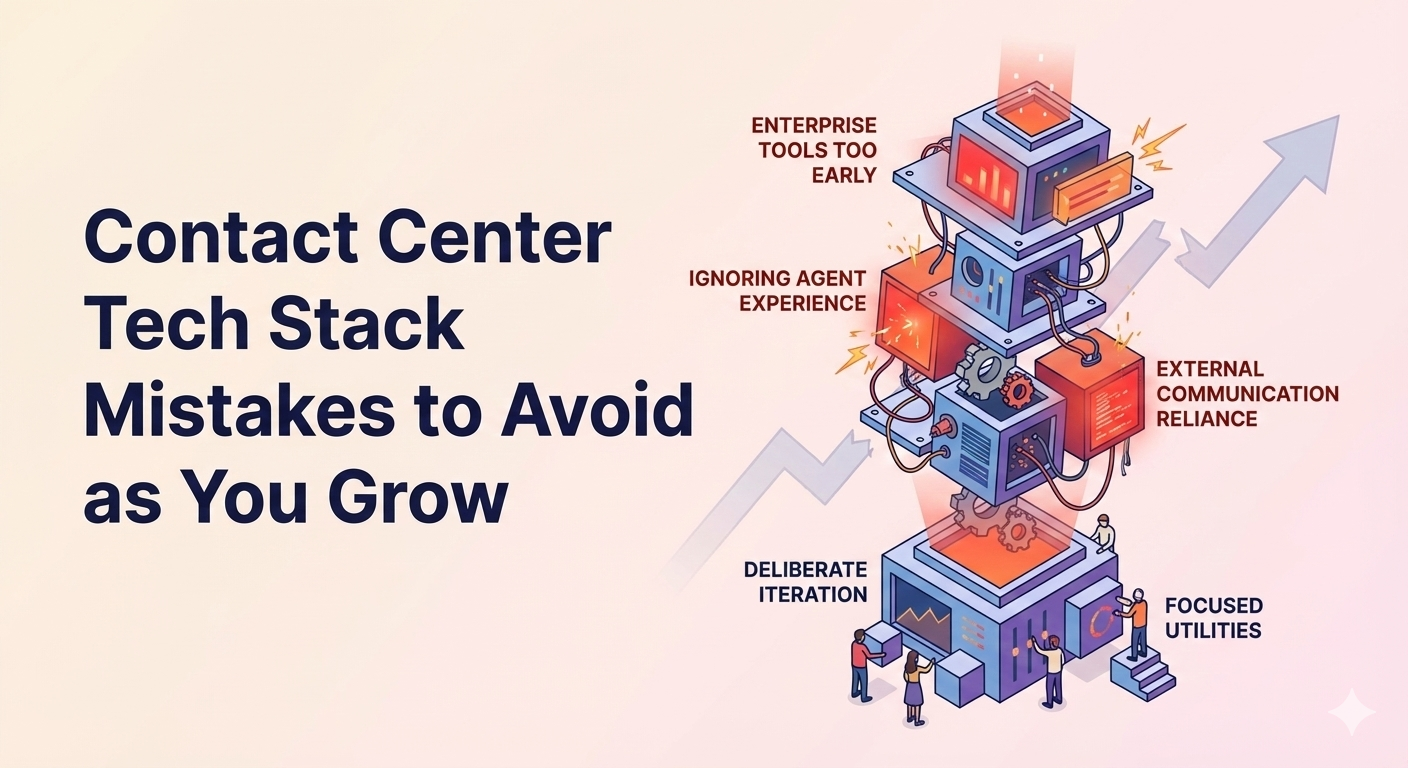
Contact Center Tech Stack Mistakes to Avoid as You Grow
Most tech debt starts with good intentions
Most contact center tech debt is created with good intentions.
Teams move quickly, make compromises, and assume they will clean things up later. In reality, that cleanup rarely happens once volume increases and priorities shift.
Below are the most common contact center tech stack mistakes and practical ways to avoid them.
1. Buying enterprise tools too early
Large, enterprise platforms often introduce:
- Long implementation timelines
- Complex configuration and maintenance
- Features that go unused for years
Early stage teams should choose tools that match their current operational maturity, not their aspirational org chart.
If a tool requires a dedicated admin to function well, it is probably too heavy for your current stage.
2. Underestimating the importance of the ticketing system
Your ticketing system is the backbone of your contact center.
Choosing a system that cannot support automation, integrations, or reliable reporting limits everything else you try to build on top of it.
Migrating ticketing systems later is one of the most disruptive changes a support organization can make. It impacts agents, managers, reporting, and historical data all at once.
Getting this decision right early saves enormous effort later.
3. Ignoring agent experience
Agent friction shows up quickly in metrics like handle time, resolution quality, and burnout.
Common sources of friction include:
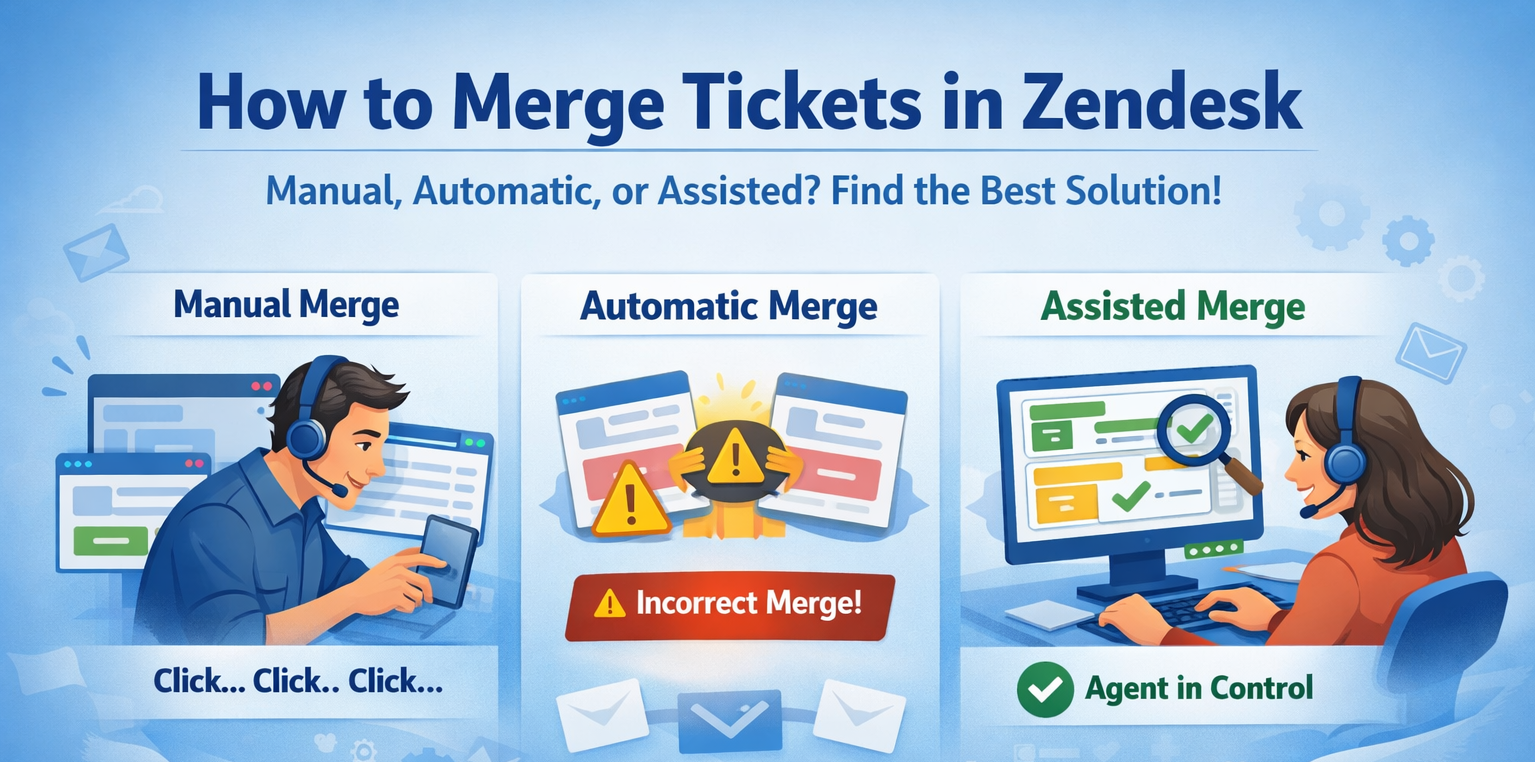
- Duplicate tickets across channels
- Missing customer or issue context
- Important updates buried in chat or email threads
Focused utilities like Easy Merge and Custom Notifications exist to remove this friction directly inside Zendesk, without adding process or training overhead.
4. Treating tools as permanent decisions
Contact centers evolve constantly. Your tech stack should evolve with them.
Regularly assess:
- Where agents lose the most time
- Which steps are still manual
- Where visibility is limited or delayed
Small improvements made consistently compound into major operational gains over time.
5. Relying on external tools for critical communication
Slack and email are convenient, but they are unreliable during high volume incidents.
Messages get buried, notifications are missed, and context is lost. Agents need timely, unavoidable communication in the tools where they already work.
In app, role based notifications inside the ticketing system are far more effective for incidents, outages, and priority customers.
Build intentionally to avoid long term pain
Strong contact center stacks are built through deliberate iteration.
Focus on solving the biggest problems first, keep systems flexible, and introduce focused tools only when they remove clear friction.
That approach creates a support organization that scales smoothly instead of constantly reacting to preventable issues.